Cricket Care and Feeding
Crickets have long been the symbol of good luck in many cultures.
By following the following easy instructions, you will have good luck keeping your crickets alive and healthy.
Housing
Your first task is to set up a housing container for them.
Suitable containers include glass aquariums, wide-mouth glass jars, large plastic containers or 5-gallon buckets.
Large garbage cans have been found successful for larger colonies.You will need an aluminum screen cover for the container.
Don't use fiberglass, as the crickets will chew through it.
Your container should be of a size to provide adequate space for your crickets to spread out comfortably.
Do not overcrowd them, as overcrowding is the major cause of excessive death in crickets.
They will be fine if they aren't required to be "stacked up" in their new home.
Each cricket needs to be able to sit directly on some surface rather than on another cricket.
Bedding
You will find that using no bedding reduces the possibility of offensive odors considerably.
However, if you wish to use a bedding, then sand, wood shavings, coconut fiber, or peat moss all make a suitable substrate.
Feed and Feeding
House crickets will eat most edible foods such as stale bread, poultry mash, cornmeal, dry powdered dog or cat food,
tropical fish flakes, pond fish pellets, rabbit chow and many other similar foods.
Feeding crickets correctly is important because they require a high protein diet to keep them healthy.
Without an adequate diet, they will prey upon each other.
Also, if you are using them as live food for your herps, the nutrition from the crickets will be passed on to your herps,
reptiles or amphibians, thus making it extremely important to keep them healthy.
To provide a balanced diet, supplement the dry food with raw vegetable or fruit scraps such as slices of apple, banana,
or oranges, plus greens such as lettuce or cabbage.
The food should be placed in a small, shallow plastic container, periodically discarding any uneaten portions on a regular
basis to insure cleanliness and freedom from mold.
If desired, crickets can be "gut-loaded" with a higher protein food several days prior to their being fed to your herps,
however we do not consider this a necessity.
If you would like to make your own cricket food, we recommend the following recipe.
Several dollars worth will last several months or more, depending on the number of crickets you are feeding.
This food is used for all sizes of crickets. It is based on commercial dried cat food.
In addition, provides a supplement of 10 parts skim milk powder (by volume) to 1 part of a good quality calcium
supplement intended for reptiles or amphibians.
The cat food is shaken in this mixture until coated and then fed to the crickets.
More supplements can be sprinkled onto the food as the crickets eat it.
To provide a balanced diet, this food is supplemented with alfalfa pellets (commercial rabbit food) and,
whenever available, raw vegetable or fruit scraps. Do not forget to supply your crickets with water!
One method is to place cotton or pieces of sponge (or paper tols in a shallow dish and moisten it.
Make sure there is no standing water in your water holder, as small crickets can easily drown in even the smallest amount
of standing water. Be sure to wash the water holder and wash or replace the sponges at least once a week (twice is better).
Unwashed water holders are one of the leading causes of offensive odors in your cricket house.
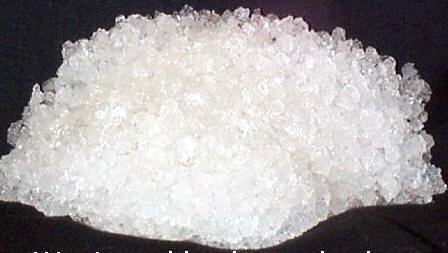
A much easier and more convenient method of watering crickets is to use the water gel crystals.
Crickets cannot drown in them and it solves the problem of having to replace cotton or wash the sponges using the method
mentioned above. Crickets are clean insects and must be kept clean and dry.
Your success with them will be reflected by the care you have given them.
We suggest that once a week you scrape or sweep your containers.
Regardless of the number of crickets in your containers, you will find it simple to clean around them.
Temperature
Crickets thrive at temperatures higher than those in the average house.
They prefer 80-90 degrees F. (26-32 degrees C.), however they seem to live longer at somewhat lower temperatures.
This is something to keep in mind if you want to keep an excess of crickets alive as long as possible.
Smaller crickets require warmer temperatures. Pinheads do best at 88-92 degrees F., with 1/2 to 3/4 inch doing best
at 80-92 degrees F. and adults at 75-85 degrees F.
Cricket nymphs (smaller than pinheads) held at 80 degrees F. require up to 60-65 days to mature,
while those kept at 90 degrees F. require only 30-35 days to complete their development.
A "Handy" Cricket Feeder
A square 1-gallon milk or water jug works well as a cricket collector and feeder.
Cut the bottom from the jug, keeping the screw or snap-on top. You now have a large funnel.
Use duct tape on the inside to cover the openings into the handle, as crickets will hide there.
Holding the feeder over your cricket container, remove one of the small pieces of egg crate and shake it into the feeder.
Sprinkle the crickets with calcium and / or vitamin supplements as required and shake gently to coat the crickets.
To feed, tip the funnel into the herps cage and gently shake. Caution! Crickets are very susceptible to insecticides!
Avoid using insecticides such as sprays, "no-pest strips" or anything that might give off fumes - even if not in the same room.
General Cricket Information
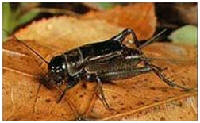
Crickets begin life as eggs, hatch into nymphs which mature into adults.
When the nymphs grow too large for their exoskeletons which are made of chitin, they molt a series of 5 times.
After the final molt, the wings are released and the male can then "chirp".
Crickets chirp by rubbing their two upper wings together, but only the male has the special rough vein on its wing that
makes the sound louder when the other wing is rubbed against it.
Male crickets grow to approximately 1 inch long and females are even larger.
• Keeps crickets hydrated for longer life.
Replace an open water dish (which commonly drowns crickets) with the convenient water supply from a Water Pillow.
The advanced polymer within a Water Pillow steadily provides moisture, lasting days rather than a sponge that dries out.
Simply moisten the Water Pillow and set inside your reptile's enclosure.
Completely reptile safe, and keeps crickets alive longer.


_________________________________________________________________________
Selling Water Absorbent Gel Crystals since 1995
WaterGel Crystals©